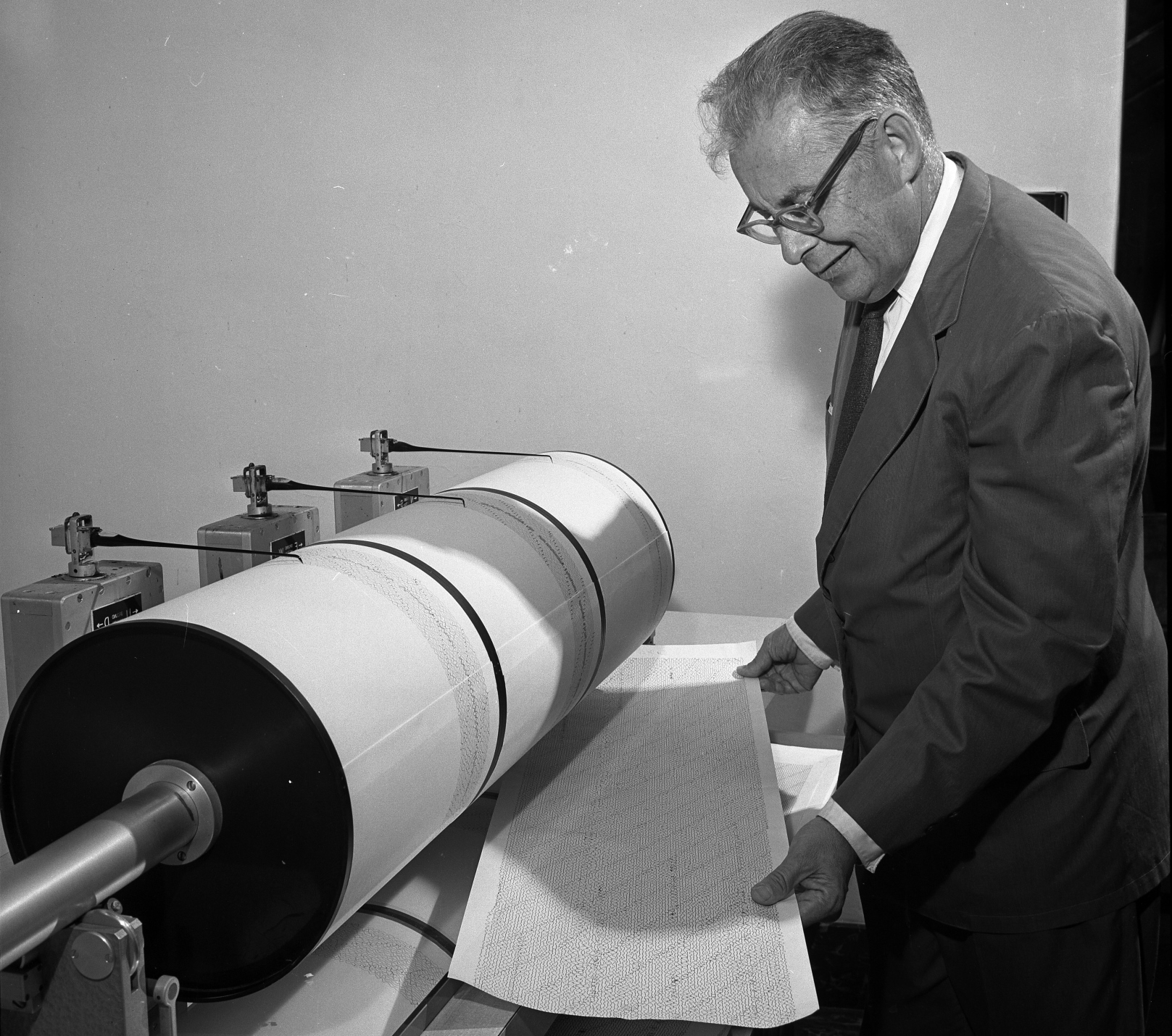
Oggi, in occasione della Giornata Mondiale della Poesia, pubblichiamo una "chicca" che pochi conoscono. Non è stata scritta da un poeta famoso, ma da un sismologo (molto famoso!). Nel 1933, due anni prima di pubblicare il lavoro sulla magnitudo che ha preso il suo nome e che tutti conosciamo, Charles Francis Richter (1900-1985) scrisse questa breve poesia che intitolò "EARTHQUAKE".
È interessante notare come egli pose l'enfasi sull'importanza delle buone pratiche costruttive attraverso un racconto fintamente autobiografico e ironico nel quale un terremoto fa crollare il bellissimo (ma fragile) edificio che aveva costruito.
Earthquake
I set my aspiration on the soundest rock,
And chose my building-stone with care:
No moral clay, no pious wooden block,
But granite fact, and rigid logic layer by layer.
I built high towers not of ivory, but stone;
Wide rooms for books and serious things.
There was house room for solid work alone,
But on top arose my best imaginings.
Finished at last, I felt and architectural pride;
No mind had such a house before.
Then, as I was about to march inside,
There came a violent shaking and a stunning roar.
In spite of argument the clashing stones broke free;
In vain the rock stood firm and sound.
My towers collapsed in streams of masonry,
And all my lofty dreams fell crashing to the ground.
Though not beyond repair, the splendid house was wrecked.
I cursed, and left it unrestored.
Puzzled, not comprehending my defect,
I came with my perplexities before the Lord,
Who, smiling, said, “You are no mason, it appears.
Return, and make a new assault.
Use better mortar, and dismiss your fears.
The rock and stone were good; the builder was at fault.”
Charles Frances Richter, July 2, 1933
Terremoto
Ho posto la mia aspirazione sulla roccia più solida,
e ho scelto con cura la mia pietra da costruzione:
Nessuna argilla morale, nessun pio blocco di legno,
ma fatto di granito e logica rigida, strato dopo strato.
Ho costruito alte torri non di avorio, ma di pietra;
Ampie stanze per i libri e le cose serie.
C'era spazio in casa solo per il lavoro solido,
ma in cima sorgevano le mie migliori fantasie.
Finalmente finita, provai un orgoglio architettonico;
Nessuna mente aveva mai avuto una casa simile.
Poi, mentre stavo per entrare,
si sentì una scossa violenta e un boato impressionante.
Nonostante le aspettative, le pietre scontrandosi si dissaldarono;
Invano la roccia rimase salda e solida.
Le mie torri crollarono in torrenti di muratura,
e tutti i miei sogni più alti caddero a terra.
Anche se non irrecuperabile, la splendida casa era distrutta.
Bestemmiai e la lasciai senza restauro.
Perplesso, non comprendendo il mio errore,
mi presentai con le mie perplessità davanti al Signore,
che, sorridendo, disse: "A quanto pare non sei un muratore.
Ritorna e fai un nuovo assalto.
Usa una malta migliore e allontana le tue paure.
La roccia e la pietra erano buone; la colpa era del costruttore (1)".
Charles Frances Richter, 2 luglio 1933 (traduzione quasi letterale)
(1) Qui Richter aveva giocato sul doppio significato della parola inglese "fault": colpa, ma anche faglia.
Il sito uso cookie tecnici, cookie analytics e cookie di terze parti per migliorare la tua esperienza di navigazione. Acconsenti al loro uso? Impostazioni cookieACCONSENTO
Privacy & Cookies Policy
Privacy Overview
This website uses cookies to improve your experience while you navigate through the website. Out of these cookies, the cookies that are categorized as necessary are stored on your browser as they are essential for the working of basic functionalities of the website. We also use third-party cookies that help us analyze and understand how you use this website. These cookies will be stored in your browser only with your consent. You also have the option to opt-out of these cookies. But opting out of some of these cookies may have an effect on your browsing experience.
Necessary cookies are absolutely essential for the website to function properly. This category only includes cookies that ensures basic functionalities and security features of the website. These cookies do not store any personal information.
Any cookies that may not be particularly necessary for the website to function and is used specifically to collect user personal data via analytics, ads, other embedded contents are termed as non-necessary cookies. It is mandatory to procure user consent prior to running these cookies on your website.
Scopri di più da INGVterremoti
Abbonati ora per continuare a leggere e avere accesso all'archivio completo.